
 Rated 4.9 (974) Reviews
What Size Water Heater Do I Need? A Northern Virginia Sizing Guide
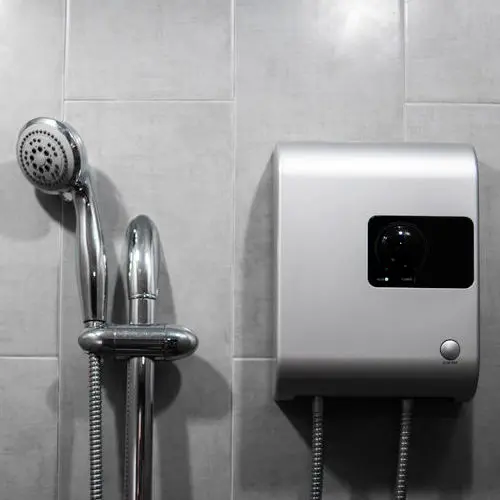
Answering “what size water heater do I need” starts with your household’s busiest hour of hot water use, not the tank you have now. Tank units are sized by first hour rating (FHR), the gallons a full tank delivers in one hour; tankless units are sized by gallons per minute (GPM) at the temperature rise your incoming water needs.
Ordering the same size as the old unit is the most common sizing shortcut, and it often misses because the household has changed since that unit went in. A few minutes with a peak hour worksheet produces a far more reliable number.
How Does First Hour Rating Determine Tank Water Heater Size?
A tank water heater’s first hour rating is the number of gallons of hot water it can supply in one hour starting with a full tank, and it is the correct number to compare against your household’s peak demand. Tank capacity alone doesn’t tell you that.
According to the U.S. Department of Energy’s water heater sizing guidance, first hour rating depends on the tank’s capacity, its heat source (gas burner or electric element), and the size of that burner or element. Two 50-gallon tanks can deliver different amounts of hot water during a busy morning. The target is a model whose first hour rating at least matches your peak hour demand.
How Do I Calculate My Household’s Peak Hour Demand?
Peak hour demand is the total gallons of hot water a household uses during its single busiest hour of the day, and it sets the minimum first hour rating for a new tank water heater. For many households with commuters and school schedules, that hour falls in the morning, though some homes peak in the evening when laundry, dishes, and showers overlap.
- Pick your busiest hour: morning, midday, or evening.
- List every hot water use during that hour, including showers, shaving, dishes, and laundry.
- Multiply each use by its average gallons per use from the table.
- Add the totals. The sum is your peak hour demand and the minimum first hour rating to shop for.
| Use | Average Gallons of Hot Water Per Use |
|---|---|
| Shower | 20 |
| Shaving | 2 |
| Hand dishwashing or food prep | 3 |
| Automatic dishwasher | 7 |
| Clothes washer, top-loader | 25 |
| Clothes washer, front-load (H-axis) | 15 |
Source: U.S. Department of Energy, Sizing a New Water Heater
For example, a four-person household in Manassas with three morning showers, one front-load wash cycle, and breakfast prep at the sink uses 78 gallons in its peak hour. That household needs a tank water heater with a first hour rating of 78 gallons or more.
| Use | Times in Peak Hour | Gallons |
|---|---|---|
| Shower (20 gallons each) | 3 | 60 |
| Front-load clothes washer (15 gallons) | 1 | 15 |
| Food prep (3 gallons) | 1 | 3 |
| Peak hour demand | 78 |
These figures are averages. Low-flow showerheads and shorter showers reduce peak demand, while a high-flow shower system raises it, so measuring your own fixtures gives a more accurate number than averages alone.
What Size Tankless Water Heater Do I Need?
A tankless water heater is sized by the combined flow rate of every hot water fixture you expect to run at the same time, in gallons per minute, at the temperature rise needed to heat your incoming water to its target temperature. Tankless units are rated by the maximum temperature rise they can deliver at a given flow rate, so both numbers matter.
- Add up simultaneous flow rates. List the fixtures that could run together and add their GPM ratings. If a rating is unknown, run the fixture into a bucket for one minute and measure the volume.
- Find the temperature rise. Subtract your incoming water temperature from your target output, which is 120°F for most household uses. Without a measured incoming temperature, the Department of Energy suggests assuming 50°F, which works out to a 70°F rise.
- Match a unit to both numbers. Check the manufacturer’s flow rating at your required temperature rise, not just the unit’s maximum flow.
Northern Virginia winters are where tankless sizing gets tested. Incoming water runs colder in January than in July, which increases the temperature rise the unit must deliver and reduces the flow it can heat to target. Measuring the cold supply with a thermometer during winter gives the most reliable number for a year-round sizing decision.
As an example, two showers rated at 2.5 GPM plus a kitchen faucet at 0.75 GPM total 5.75 GPM. The Department of Energy describes a 70°F rise at 5 GPM as typical for gas-fired tankless units and 2 GPM for electric units, so that household would need a higher-capacity unit, more than one unit, or staggered use during peak times.
A tankless retrofit also has to work with the home’s existing systems: gas units need enough gas supply and proper venting, and electric units need enough electrical capacity. Kinnett Plumbing can help you evaluate a tankless upgrade against your actual flow rates and winter inlet temperature before you commit to a unit.
Should You Replace a Water Heater With the Same Size?
Replacing a water heater with the same size only makes sense if your household’s peak demand hasn’t changed since the old unit was installed. Several common changes push demand up or down:
- More people at home, such as a new baby, a relative moving in, or older kids returning from college.
- An added bathroom, often from finishing a basement.
- New fixtures, such as a higher-flow showerhead or a larger washing machine.
- Fewer people at home, which may allow a smaller, more efficient unit.
If peak demand is unchanged and the old unit kept up, replacing a tank-style unit with a matching first hour rating is usually the most straightforward path. If demand has grown, size to the new number rather than the old label.
What Happens If a Water Heater Is the Wrong Size?
An undersized water heater runs out of hot water during the busiest hour of the day, and an oversized one spends energy keeping more water hot than the household uses. A properly sized water heater meets household needs while operating more efficiently.
An undersized tank keeps its burner or element cycling through the morning rush and still leaves the last person in line with a cold shower. An undersized tankless unit shows the problem differently: faster flow or colder inlet water can lower the temperature at the most distant faucet, which is why a far bathroom may run lukewarm on winter mornings.
If a tank is already leaking or has failed outright, sizing can wait. Shut off the water supply to the heater and call for emergency plumbing service to limit water damage first.
Why Have a Licensed Plumber Size Your New Water Heater?
A licensed plumber measures what a worksheet can only estimate: actual fixture flow rates, winter inlet temperature, and the distance from the heater to the farthest fixture. Installation also has to account for venting on gas units, gas line capacity, and the permit and inspection requirements of your county or city building department.
Kinnett Plumbing is licensed by the Virginia Department of Professional and Occupational Regulation (license #2705 088 083 C), bonded, and insured. Owner Kevin Kinnett built the business on honest pricing with no upsell pressure, so Kinnett Plumbing’s water heater services start with a recommendation sized to your home, not the biggest unit on the truck.
Frequently Asked Questions About Water Heater Sizing
How many gallons of hot water does a shower use?
The U.S. Department of Energy’s peak hour worksheet estimates an average of 20 gallons of hot water per shower. Actual use depends on showerhead flow rate and shower length, so a home with low-flow showerheads may use less. Three back-to-back morning showers at that average add up to 60 gallons of peak hour demand on their own.
Where do I find a water heater’s first hour rating?
A water heater’s first hour rating appears on the yellow EnergyGuide label, listed in the top left corner as “Capacity (first hour rating).” The Federal Trade Commission requires the label on new conventional storage water heaters but not on heat pump water heaters, so check the manufacturer’s product literature for heat pump models.
What incoming water temperature should I use to size a tankless water heater?
The U.S. Department of Energy suggests assuming 50°F incoming water unless you know otherwise. For the most accurate tankless sizing in Northern Virginia, measure the cold supply in winter by holding a thermometer under a cold-water faucet, since colder incoming water increases the temperature rise the unit has to deliver.
Can a water heater be too big?
Yes. An oversized tank water heater keeps more water hot than the household uses, which spends energy on heat that never reaches a faucet. The U.S. Department of Energy notes that a properly sized water heater meets household needs while operating more efficiently, so the goal is a rating that covers peak demand without far exceeding it.
Does a gas or electric water heater change the size I need?
Fuel type changes output, so it affects which model meets your demand. For tank units, first hour rating depends on tank capacity, heat source, and burner or element size. For tankless units, the U.S. Department of Energy describes a 70°F rise at 5 gallons per minute as typical for gas-fired models and 2 gallons per minute for electric models.
Get a Water Heater Sized for Your Northern Virginia Home
Kinnett Plumbing serves homeowners in Manassas, Woodbridge, and across Northern Virginia from 12400 Hunters Grove Rd, Manassas, VA 20112, with a 4.9-star rating across 811 reviews and discounts for military members, teachers, police officers, and firefighters. Call (703) 878-3154 or schedule a water heater sizing visit to get a recommendation based on your home’s actual peak demand.






 Jennifer Bishop