Emergency plumber cost in Manassas comes down to four things: when you call, how serious the problem is, what parts the repair needs, and how much damage the water is doing while you wait. No honest plumber can quote a firm price for a problem they haven’t seen, but you can, and should, get the price explained before any work begins.
This guide covers how emergency plumbing pricing works, what pushes a bill up, which problems can safely wait until morning, and what to ask so you pay a fair price when something goes wrong late at night.
How Much Does an Emergency Plumber Cost in Manassas?
There isn’t one number. A pinhole leak under a kitchen sink and a burst supply line behind finished drywall are both emergencies, but they are very different jobs with very different bills. Be cautious of anyone who gives you a firm total over the phone before seeing the problem.
Most emergency plumbing bills are built from the same four pieces:
A service or diagnostic charge for sending a licensed plumber to your home and finding the actual cause of the problem.
Labor, which reflects how long the repair takes and how hard the problem is to reach.
Parts and materials, which can range from a single valve or supply line to a full water heater.
Timing, because nights, weekends, and holidays generally cost more than a scheduled weekday visit.
The fair way to handle an emergency is straightforward: the plumber diagnoses the problem, explains what’s wrong in plain language, and gives you the price before starting the repair. That’s the standard Kinnett Plumbing holds itself to, with honest pricing and no upsell pressure.
What Drives the Cost of Emergency Plumbing?
Knowing what moves the price helps you make better decisions in the moment. Here’s what matters most and what you can do about each factor.
What moves an emergency plumbing bill up or down
Cost factor
Why it affects the bill
What you can do
Time of the call
After-hours, weekend, and holiday calls pull a plumber away from a normal schedule.
If you can stop the water and nothing is being damaged, ask whether a first-thing-in-the-morning visit makes sense.
Severity and access
A leak behind a finished wall, under a floor, or in a crawl space takes longer to locate and reach than one under a sink.
Describe exactly what you see and where. Photos help the plumber arrive prepared.
Parts needed
Replacing a supply line or valve costs far less than replacing a water heater or a section of pipe.
Ask whether the fix is a repair or a replacement, and why.
The longer water runs, the bigger the job gets. Drying out and restoring floors or drywall is a separate cost on top of the plumbing repair.
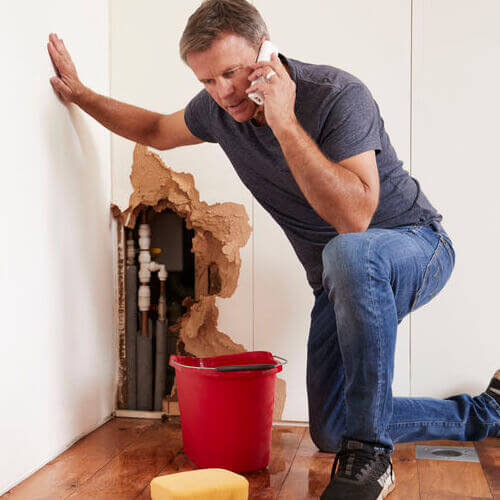
Shut off the water as fast as you can (see the steps below).
Is It a Real Emergency, or Can It Wait Until Morning?
Call right away if water is actively damaging your home or you’ve lost something your household can’t go without, like water service or a working toilet. If the problem is contained and nothing is getting wet, it can usually wait for regular hours, which saves you the after-hours premium.
When to call now vs. when to schedule
Call right away
Usually safe to schedule
A burst pipe or a leak you can’t stop
A dripping faucet
Sewage backing up into a tub, shower, or floor drain
One slow-draining sink or tub
A water heater leaking from the tank
A running toilet (turn off the valve behind it)
No water anywhere in the house
A small leak you’ve stopped with the shutoff valve
Water near outlets, wiring, or electrical panels
Low pressure at a single fixture
If your situation is in the first column, go straight to our emergency plumbing service page or call us.
What to Do While You Wait for the Plumber
A few minutes of quick action can keep a plumbing repair from turning into a much larger restoration project. These steps also make the plumber’s job faster once they arrive.
Shut off the main water valve. It’s usually where the water line enters your home, often in the basement, crawl space, utility room, or near the water heater.
Cut power or gas to a leaking water heater. Turn off the breaker for an electric unit or set a gas unit to “off” or “pilot.”
Move belongings out of the water’s path and keep people and pets away from any area where water is near electrical outlets.
Take photos of the damage before cleanup starts. Your insurance company may ask for them.
Not every water problem ends in a plumbing bill. Much of Prince William County gets water and sewer service from Prince William Water, which did business as the Prince William County Service Authority until July 1, 2024. If you live inside the City of Manassas or Manassas Park, your water and sewer service may come from your city instead, so check the name on your bill.
If water is bubbling up near the street or the meter, or your whole neighborhood loses pressure at once, call your water provider first. The problem may be on the utility’s side, and one phone call could save you a service charge. If the problem is inside your home, that’s when you call a plumber.
How to Make Sure You’re Paying a Fair Price
An emergency is stressful, but it’s still a purchase. These questions protect you with any plumber you call:
Is the plumber licensed in Virginia? Ask for the license number. Kinnett Plumbing is licensed, bonded, and insured, with Virginia DPOR license #2705 088 083 C.
What will the repair cost before you start? Get the price explained up front, not after the work is done.
Can I get an itemized invoice? Parts and labor should be listed separately.
Is there a temporary fix now and a permanent repair later? Stopping the leak tonight and finishing during regular hours can sometimes make sense.
Do you offer any discounts? Kinnett Plumbing offers discounts for military members, teachers, police officers, and firefighters.
What do other homeowners say? Check recent customer reviews. Kinnett Plumbing holds a 4.9-star rating across 811 reviews.
Here’s how one homeowner described a late-night call:
“Called late on a Monday with soaked carpet in my basement from a cracked water heater. Was placed on the schedule immediately, and Dan was at my house within 45 min. He assessed the issue, drained the tank, and capped the hot water line until he could replace the water heater first thing Tuesday morning. While working, he also had a water restoration company contact me to get restoration efforts moving. Service was prompt, empathetic, and thorough.” — Jennifer Bishop
Notice what happened there: the immediate problem was contained that night, and the full replacement was done the next morning. That’s often the most sensible way to handle an after-hours emergency.
Frequently Asked Questions
How much does an emergency plumber cost in Manassas?
It depends on when you call, how serious and hard to reach the problem is, and what parts the repair needs. Most bills include a service or diagnostic charge, labor, and parts. Because every emergency is different, the fairest approach is to have the plumber diagnose the problem and explain the price before any repair work begins.
Why do emergency plumbers charge more after hours?
After-hours, weekend, and holiday calls require a licensed plumber to be available outside a normal schedule and respond quickly with a stocked truck. That availability costs more to provide. If you can shut off the water and nothing is being damaged, waiting for regular hours is usually the less expensive option.
Is it cheaper to wait until morning?
Often, yes, but only when the problem is truly contained. If you’ve shut off the water and there’s no active leak, sewage backup, or water near electrical, a morning appointment usually costs less. If water is still spreading, waiting can cost far more in drying and repairs than the after-hours visit would have.
Does homeowners insurance cover emergency plumbing?
It depends on your policy. Coverage for water damage and coverage for the plumbing repair itself can be treated differently, so call your insurance company to ask. Either way, take photos of the damage before cleanup, keep your itemized invoice, and document when the problem started.
What should I ask before an emergency plumber starts work?
Ask for the plumber’s Virginia license number, what’s causing the problem, what the repair will cost, and whether a temporary fix now and a permanent repair later is an option. Ask for an itemized invoice that separates parts from labor, and ask whether any discounts apply to your household.
Need an Emergency Plumber in Manassas?
When something goes wrong, you want a straight answer and a fair price. Kinnett Plumbing is a family-owned, licensed plumbing company based in Manassas, serving homeowners across Northern Virginia. We’ll tell you what’s wrong, what it will take to fix it, and what it will cost before we start.
If you are trying to figure out whether you need whole-house repiping in Northern Virginia, you are probably dealing with more than one annoying plumbing issue at the same time. Maybe the shower pressure has dropped, the water looks rusty, or you keep calling a plumber for leaks that seem to pop up in different places. Think of your plumbing system like the veins of your home. When one small section has a problem, a repair may be enough. But when the pipes throughout the home are aging, corroded, or failing in several spots, repiping may be the smarter and safer long-term fix.
What Does Whole-House Repiping Mean?
Whole-house repiping means replacing most or all of the water supply pipes inside your home. These are the pipes that carry clean water to your sinks, tubs, showers, toilets, washing machine, dishwasher, and water heater.
This does not always mean tearing your home apart. A skilled plumbing team plans the work carefully, finds practical access points, and replaces old pipes with modern materials such as PEX or copper. The goal is to give your home a stronger, cleaner, more reliable plumbing system.
A good way to picture it is this: patching one leaky pipe is like putting a bandage on a scrape. Repiping is more like replacing a worn-out garden hose that has cracks all along its length. At some point, patching is not the best use of your money.
Why Northern Virginia Homes May Need Repiping
Many homes in Northern Virginia have been standing for decades. That is part of what gives neighborhoods in Woodbridge, Manassas, Alexandria, Fairfax, Arlington, and surrounding areas their charm. But older homes often come with older plumbing.
Depending on when your home was built, it may have plumbing materials that are reaching the end of their useful life. Pipes can wear down because of age, water quality, pressure changes, soil conditions, freezing temperatures, and years of daily use.
Northern Virginia homeowners also deal with seasonal temperature swings. Cold winters can stress plumbing, especially in crawl spaces, exterior walls, garages, and other areas where pipes are more exposed. Over time, that stress can lead to leaks, cracks, and weak spots.
Sign 1: You Keep Finding Leaks
One leak does not automatically mean you need a full repipe. Pipes can leak for many reasons, including a loose fitting, a small crack, or damage from freezing. But repeated leaks are a different story.
You may need to consider whole-house repiping if:
You have had multiple pipe leaks in the last few years
Leaks are happening in different parts of the home
Repairs are becoming more frequent
You are worried about what may leak next
You have water stains on ceilings, walls, or floors
Here is the shop teacher way to think about it: if one chair leg is loose, you tighten it. If every chair in the classroom is wobbling, the problem is bigger than one screw. Repeated leaks usually mean the piping system is wearing out as a whole.
Sign 2: Your Water Looks Rusty, Brown, or Yellow
Clean water should look clear. If your water comes out rusty, brown, yellow, or tinted, your pipes may be corroding from the inside. This is especially common with older galvanized steel pipes.
Sometimes discoloration happens after nearby utility work or when the city flushes water lines. But if rusty water keeps showing up, especially from multiple faucets, it is time to pay attention.
Rust-colored water can stain sinks, tubs, laundry, and toilets. It can also make you feel uncomfortable using your water for cooking, bathing, or washing clothes. While discoloration does not always mean the water is unsafe, it is a clear sign that your plumbing system needs professional inspection.
Sign 3: Your Water Pressure Is Getting Worse
Low water pressure can be frustrating. Showers feel weak, sinks take longer to fill, and appliances may not work as efficiently. Sometimes low pressure comes from a clogged aerator, a faulty valve, or a water heater issue. But if pressure is low throughout the house, the pipes themselves may be the problem.
Old pipes can become narrowed inside by corrosion, mineral buildup, or rust. Imagine trying to drink through a straw that has gunk built up inside it. Water can still pass through, but not as easily.
Watch for these signs:
Weak pressure in several rooms
Water slowing down when someone flushes a toilet
A shower that loses pressure when the washing machine runs
Faucets that used to work well but now feel sluggish
Pressure that keeps getting worse over time
When pipe interiors become too restricted, cleaning or small repairs may not solve the issue. Repiping may be the cleanest way to restore a strong, steady water flow.
Sign 4: Your Pipes Are Old or Made From Outdated Materials
The age and material of your pipes matter. Many older homes have galvanized steel, polybutylene, or aging copper pipes. Some materials are more prone to corrosion, brittleness, or failure as they age.
You may not know what kind of pipes you have, and that is okay. Most homeowners do not spend their weekends studying pipe materials. A licensed plumber can inspect visible plumbing in your basement, crawl space, utility room, or under sinks to help identify what is in your home.
As a general rule, if your pipes are several decades old and you are already seeing symptoms like leaks, discoloration, or low pressure, it is smart to ask whether repiping is more cost-effective than another round of repairs.
Sign 5: Your Water Has a Strange Taste or Smell
Water that tastes metallic or smells unusual can be another clue that your plumbing needs attention. A metallic taste may come from old, corroded pipes. A musty smell may point to a separate issue, such as bacteria in a drain or water heater concerns.
This is one of those signs that deserves a professional look. You do not need to diagnose it yourself. Your job is simply to notice the change and call someone who knows what to check.
If the taste or smell happens from just one faucet, the issue may be local. If it happens throughout the home, the plumbing system may be involved.
Sign 6: You Hear Banging, Knocking, or Rattling Pipes
Pipes can make noise for several reasons. A loud banging sound may be water hammer, which happens when fast-moving water suddenly stops or changes direction. Rattling may come from loose pipe supports. Creaking or ticking can happen when pipes expand and contract.
Noisy pipes do not always mean you need a whole-house repipe. But when noise comes along with leaks, pressure problems, or old pipes, it adds to the bigger picture.
Think of plumbing symptoms like clues on a chalkboard. One clue may not solve the problem. But when you see several clues together, the answer becomes clearer.
Sign 7: You Are Remodeling an Older Home
If you are already opening walls for a kitchen, bathroom, laundry room, or basement remodel, it may be the perfect time to look at your plumbing. Nobody wants to install beautiful new tile, cabinets, or flooring only to tear into them later because an old pipe failed.
During a remodel, ask your plumber to evaluate the existing pipes. If the plumbing is near the end of its life, repiping during the renovation may save money, time, and stress later.
This is especially important if you are planning to stay in the home for many years. New finishes are great, but reliable plumbing behind the walls is what protects those finishes.
Sign 8: You Are Tired of Paying for Repeat Repairs
There comes a point when repeated repairs stop feeling practical. If you are calling for plumbing service again and again, the repair costs can add up quickly.
Whole-house repiping is an investment, but it can often make more sense than chasing one leak after another. It can also help reduce the risk of water damage, mold concerns, ruined flooring, ceiling stains, and emergency calls.
Ask yourself:
How many plumbing repairs have we paid for recently?
Are we fixing the same type of problem over and over?
Are we worried every time we leave town?
Would a long-term solution give us more peace of mind?
If the answer is yes, it may be time to talk with a professional about repiping.
Repair or Repipe: How Do You Know the Difference?
A simple repair may be enough when the problem is isolated. For example, a single leaking fitting under one sink may not point to a whole-house issue.
Repiping becomes worth considering when the problems are widespread, repeated, or connected to aging materials. A plumber will usually look at the whole picture, not just one symptom.
A repair may be right if:
The leak is limited to one spot
Your pipes are otherwise in good condition
Water pressure is normal throughout the home
Your water is clear
The issue was caused by accidental damage
Repiping may be right if:
Leaks keep happening
Your pipes are very old
Water pressure is poor in multiple areas
Water is rusty or discolored
You have outdated pipe materials
Repairs are becoming expensive and frequent
What Happens During a Whole-House Repiping Project?
A repiping project starts with an inspection. The plumber checks your current system, identifies problem areas, and explains your options. They may look at accessible pipes, water pressure, fixtures, the water heater area, crawl space, basement, and other key locations.
Next, the plumbing team creates a plan. This includes choosing pipe materials, deciding where access is needed, and explaining what areas of the home may be affected.
During the work, the old supply lines are replaced with new piping. The crew may need to make openings in walls or ceilings, but a careful team will keep the work as neat and controlled as possible.
After the new pipes are installed, the system is tested. The plumber checks for leaks, pressure, and proper operation before the job is complete.
Will Repiping Damage My Home?
This is a very common concern, and it is a fair question. Nobody wants unnecessary holes in their walls. A professional plumber will try to limit disruption and use practical access points whenever possible.
Some wall or ceiling openings may be needed, especially when pipes are hidden behind finished surfaces. However, experienced plumbers know how to plan the work so the project is as efficient as possible.
The key is hiring a plumbing company that communicates clearly, respects your home, and explains what to expect before the work begins.
Benefits of Whole-House Repiping
Whole-house repiping can make a big difference in how your home functions every day. Benefits may include:
Better water pressure
Cleaner-looking water
Fewer leaks
Less worry about hidden pipe failures
More reliable plumbing for everyday use
Better protection for floors, walls, ceilings, and belongings
Increased confidence when remodeling or selling the home
A plumbing system that is better suited for modern household needs
It is not the flashiest home improvement project, but it is one of the most practical. New countertops are nice. Pipes that do not leak behind those countertops are even better.
FAQ
How do I know if I need whole-house repiping?
You may need repiping if you have repeated leaks, rusty water, low water pressure throughout the home, old pipe materials, or frequent plumbing repairs. A licensed plumber can inspect your system and tell you whether repairs or repiping make more sense.
Is rusty water always a sign that I need new pipes?
Not always. Rusty water can sometimes come from temporary utility work or a water heater issue. However, if the discoloration keeps happening or appears at multiple faucets, old corroded pipes may be the cause.
How long does whole-house repiping take?
The timeline depends on the size of the home, the pipe layout, the materials used, and how much access is needed. A plumber can give you a clearer timeline after inspecting your home.
Will I have to leave my home during repiping?
In many cases, homeowners can stay in the home, though water service may be shut off during parts of the job. Your plumbing team should explain the schedule so you know what to expect.
What type of pipe is best for repiping?
PEX and copper are common options. PEX is flexible, durable, and often easier to install. Copper is long-lasting and well-known. The best choice depends on your home, budget, and plumbing needs.
Can repiping improve water pressure?
Yes, it can. If low pressure is caused by old, corroded, or restricted pipes, replacing them can help restore better flow throughout the home.
Is whole-house repiping worth it?
It can be worth it if your plumbing system is old, unreliable, or causing repeat repair costs. Repiping can help prevent water damage, improve daily comfort, and give you peace of mind.
Who should I call for whole-house repiping or emergency plumbing help?
You should call an experienced local plumbing company that understands Northern Virginia homes and can respond quickly when problems happen.
Call Kinnett Plumbing for Repiping and Emergency Plumbing in Woodbridge, VA
When your pipes are trying to tell you something, it pays to listen before a small warning turns into a big mess. Whether you are seeing rusty water, dealing with weak water pressure, finding repeat leaks, or wondering if your older home is ready for new pipes, we are here to help.
When a plumbing emergency strikes in Woodbridge, VA, and surrounding areas, you need a reliable plumber who can respond quickly and efficiently. Whether you are dealing with a burst pipe, an overflowing toilet, or a failing water heater, fast action is essential to minimize damage and restore your plumbing system. Our experienced team is available 24/7 to handle all types of emergency plumbing repairs. We arrive fully equipped to diagnose and fix issues on the spot, helping your home or business get back to normal as soon as possible.
With years of expertise, we provide high-quality repairs, honest pricing, and dependable service when you need it most. If you think your home may need repiping, or if you need emergency plumbing service now, contact us today to schedule service and get peace of mind from a team that knows how to take care of Northern Virginia homes.
When a sink backs up, a shower starts draining slowly, or a toilet keeps acting up, most homeowners just want one thing: a clear drain that works again. But when you start looking into professional drain services, you may run into two common options: hydro jetting and drain snaking. If you are comparing hydro jetting vs. drain cleaning in Virginia, it helps to understand what each service does, when it works best, and how a plumber decides which tool your drain actually needs.
Think of your plumbing system like the shop sink in a busy classroom. If a pencil shaving or a wad of paper gets stuck right near the opening, you might be able to pull it out with a simple tool. But if years of grease, soap, hair, food scraps, and mineral buildup have narrowed the pipe, you need a stronger cleaning method. That is the basic difference between drain snaking and hydro jetting.
Both methods can be helpful. Both are used by professional plumbers. But they do not do the exact same job. One is better for breaking through a specific clog, while the other is better for washing the inside of the pipe more thoroughly. The right choice depends on what is causing the blockage, where it is located, and the condition of your plumbing.
What Is Drain Snaking?
Drain snaking, sometimes called augering, is one of the most common ways plumbers clear clogged drains. A drain snake is a long, flexible cable that is fed into the drain or pipe. At the end of the cable is a small head or attachment that can break up, push through, or grab the clog.
Picture threading a flexible metal line into a pipe until it reaches the trouble spot. Once the snake hits the clog, the plumber works the cable to break up the blockage or pull some of it back out. It is a practical, tried-and-true tool.
Drain snaking is often used for:
Hair clogs in bathroom sinks, tubs, and showers
Toilet clogs caused by paper or foreign objects
Small food blockages in kitchen drains
Minor buildup in household drain lines
Clogs located fairly close to the drain opening
A snake is usually a good first step when the clog is fairly simple. It can restore flow quickly, especially when the problem is caused by something solid sitting in one area of the pipe.
What Is Hydro Jetting?
Hydro jetting uses a high-pressure stream of water to clean the inside of a drain or sewer line. Instead of simply poking a hole through the clog, hydro jetting sprays water through the pipe with enough force to clear grease, sludge, roots, soap scum, and other stubborn buildup.
Imagine using a pressure washer, but designed specifically for plumbing pipes. The plumber inserts a specialized hose with a nozzle into the drain line. Water sprays forward and backward, helping break apart debris while also flushing it out of the pipe.
Hydro jetting is often used for:
Grease buildup in kitchen lines
Heavy sludge or grime inside pipes
Recurring drain clogs
Sewer line blockages
Tree root intrusion in certain cases
Commercial plumbing systems
Older buildup that keeps coming back
The key difference is that hydro jetting is more of a full pipe cleaning. It does not just open the drain. It helps scrub the pipe walls so water and waste can move through more freely.
The Main Difference: Clearing vs. Cleaning
Here is the shop teacher version: drain snaking punches through the problem, while hydro jetting washes the whole area clean.
That does not mean snaking is bad. It simply means it has a different purpose. If your drain has one clog, a snake may clear it. But if the pipe is coated with grease, sludge, or buildup, the snake may only create a small path through the blockage. Water might drain again for a while, but the clog can return because the pipe walls are still dirty.
Hydro jetting goes further. It can remove buildup along the inside of the pipe, which can make it a better option for drains that clog again and again.
A simple way to think about it:
Drain snaking: Best for opening a clogged drain
Hydro jetting: Best for cleaning the pipe more thoroughly
Drain snaking: Usually quicker for simple clogs
Hydro jetting: Better for stubborn or recurring buildup
Drain snaking: Works well for certain objects and smaller blockages
Hydro jetting: Works well for grease, sludge, and pipe-wall debris
When Drain Snaking May Be the Right Choice
Drain snaking may be the right option when the clog is straightforward. For example, if your bathroom sink suddenly stops draining after weeks of slow drainage, the cause may be hair and soap buildup near the trap. A plumber can often use a snake to remove or break up that blockage.
Snaking may also be the better choice if there is a foreign object involved. If a child flushes something that should not go down the toilet, or a small item falls into a drain, a snake or auger may be used to retrieve or move the blockage.
Drain snaking may make sense when:
The clog is new
Only one drain is affected
The problem is close to the fixture
There is no history of repeated clogs
The pipe may not need a full cleaning
The blockage is caused by hair, paper, or a small object
In many everyday situations, snaking is enough to get things flowing again. It is like using the right screwdriver instead of pulling out the whole toolbox.
When Hydro Jetting May Be the Better Choice
Hydro jetting may be recommended when the problem is deeper, heavier, or keeps returning. If you have had the same drain cleared multiple times, but the clog comes back, that is a sign that there may be buildup along the pipe walls. A snake can open a path, but hydro jetting can help remove the material that keeps causing trouble.
Kitchen drains are a common example. Even if you are careful, grease, oils, sauces, and food particles can build up over time. You may not notice it at first. Then one day, the sink drains slowly. Later, it stops draining altogether. A snake may poke through the grease, but hydro jetting can do a better job of flushing it away.
Hydro jetting may be recommended for:
Clogs that keep coming back
Multiple slow drains in the home
Sewer line backups
Grease-heavy kitchen drain issues
Bad drain odors caused by buildup
Sludge or scale inside pipes
Certain tree root problems
Preventive drain maintenance
For businesses, hydro jetting can be especially helpful. Restaurants, salons, offices, and other commercial properties often put more stress on their plumbing systems than a typical home. A deeper cleaning can help reduce future interruptions.
Is Hydro Jetting Safe for Pipes?
In many cases, hydro jetting is safe when performed by a trained plumber. The important part is that the plumber should evaluate the condition of the pipe first. High-pressure water is powerful, and that power needs to be used correctly.
If pipes are cracked, collapsed, badly corroded, or already fragile, hydro jetting may not be the best option. That is why professional diagnosis matters. A plumber may recommend a camera inspection before hydro jetting, especially for sewer lines or older plumbing systems. The camera helps show what is happening inside the pipe before the water pressure is used.
This is not a do-it-yourself job. Hydro jetting equipment is specialized, and too much pressure in the wrong situation can cause damage. A professional plumber knows how to choose the right nozzle, pressure level, and approach for the pipe.
Why Your Drain Keeps Clogging
A drain that clogs once may simply have had a bad day. A drain that clogs again and again is trying to tell you something.
Recurring clogs may be caused by:
Grease buildup
Hair and soap scum
Flushed wipes or hygiene products
Food scraps
Mineral scale
Tree roots
Poor pipe slope
Damaged or aging pipes
A deeper sewer line issue
If you clear the same drain every few weeks, the real issue may not be the clog you can see. It may be the buildup or damage farther down the line. That is where a professional plumber can help you avoid guessing.
What About Store-Bought Drain Cleaners?
Many homeowners reach for chemical drain cleaners because they seem quick and easy. The problem is that these products can be harsh on plumbing, especially if used repeatedly. They may also fail to clear the full blockage, leaving you with standing water and chemicals in the drain.
Chemical cleaners can sometimes make the job more dangerous for the plumber, too. If the drain does not clear and the chemicals remain in the line, the plumber has to work around them.
A safer approach is to call a professional when plunging does not work or when the clog returns. Your pipes are part of your home’s structure, and treating them gently can help prevent bigger problems.
How a Plumber Chooses the Right Method
A good plumber does not just show up and guess. They look at the symptoms, ask questions, and may inspect the drain or sewer line. The goal is to match the solution to the problem.
A plumber may consider:
Which drain is clogged
How long the issue has been happening
Whether more than one drain is affected
Whether there are odors or gurgling sounds
Whether sewage is backing up
The age and material of the pipes
Whether the home has a history of root problems
Whether the clog has returned after previous service
For example, one slow bathroom sink may call for a snake. Several drains backing up at once may point to a main sewer line issue. A kitchen line with repeated grease clogs may benefit from hydro jetting. A very old pipe may need inspection before any aggressive cleaning is done.
Signs You Should Call a Plumber Soon
Some drain issues can wait a little while. Others need attention quickly. Plumbing problems tend to get worse when ignored, and water damage can become expensive fast.
Call a plumber if you notice:
Water backing up into sinks, tubs, or toilets
Sewage smells coming from drains
Gurgling sounds after flushing
Multiple slow drains at the same time
A toilet that keeps overflowing
Standing water near floor drains
Repeated clogs in the same fixture
A drain that will not clear with a plunger
Water around a water heater or pipe
If the issue involves sewage, flooding, a burst pipe, or an overflowing toilet, treat it as urgent. Fast action can help protect your floors, walls, belongings, and plumbing system.
Hydro Jetting vs. Drain Snaking: Which One Do You Need?
The honest answer is: it depends on the clog.
You may need drain snaking if the problem is a simple blockage, such as hair in a shower drain or paper in a toilet. You may need hydro jetting if the pipe has heavy buildup, recurring clogs, grease, sludge, or a deeper sewer line obstruction.
Here is a simple guide:
Choose drain snaking when: The clog is isolated, recent, and likely caused by hair, paper, or a small blockage.
Choose hydro jetting when: The clog keeps coming back, the pipe has heavy buildup, or several drains are affected.
Get a professional inspection when: You are unsure, the home has older pipes, or sewage is backing up.
The best choice is not always the most powerful tool. It is the right tool. Just like in a workshop, you would not use a saw when a wrench is what you need. A professional plumber can help determine whether your drain needs a quick clearing, a deep cleaning, or a closer inspection.
FAQ
Is hydro jetting better than snaking?
Hydro jetting is better for heavy buildup and recurring clogs, while snaking is often better for simple blockages. The right choice depends on what is inside the pipe.
Does drain snaking clean the whole pipe?
Not usually. Snaking typically breaks through or removes a clog, but it may leave buildup along the pipe walls.
Can hydro jetting remove grease?
Yes. Hydro jetting is often effective for grease buildup because the high-pressure water can help break it apart and flush it from the line.
Is hydro jetting safe for old pipes?
It can be safe, but old or damaged pipes should be inspected first. A plumber may recommend a camera inspection before hydro jetting.
Why does my drain keep clogging after snaking?
The snake may be opening a small path through the clog without removing buildup from the pipe walls. Grease, sludge, roots, or pipe damage may also be involved.
Can I hydro jet my own drain?
No, hydro jetting should be handled by a trained plumber. The equipment is powerful and can damage pipes or cause injury if used incorrectly.
When is a clogged drain an emergency?
A clogged drain is an emergency when sewage backs up, a toilet overflows, water is spreading, or multiple drains stop working at once.
How do I know if my main sewer line is clogged?
Warning signs include multiple slow drains, gurgling toilets, sewage odors, water backing up into tubs or showers, and floor drain backups.
Call Kinnett Plumbing for Drain Cleaning and Emergency Plumbing in Woodbridge, VA
Whether your drain needs snaking, hydro jetting, or a professional inspection, we are ready to help. When a plumbing emergency strikes in Woodbridge, VA, and surrounding areas, you need a reliable plumber who can respond quickly and efficiently. Whether you are dealing with a burst pipe, an overflowing toilet, or a failing water heater, fast action is essential to minimize damage and restore your plumbing system.
Our experienced team is available 24/7 to handle all types of emergency plumbing repairs. We arrive fully equipped to diagnose and fix issues on the spot, ensuring your home or business is back to normal as soon as possible. With years of expertise, we provide high-quality repairs and honest pricing, so you can have peace of mind during stressful situations.
Do not wait for a slow drain to turn into a flooded room or a sewer backup. Contact us today for dependable drain cleaning, hydro jetting, drain snaking, and emergency plumbing service in Woodbridge, VA, and the surrounding areas.
If you live in Northern Virginia, you already know how wildly the weather can swing throughout the year. One week you are wearing a light sweater and the next you are digging out your heavy winter coat. These constant changes have a bigger impact on your home than you might think, especially when it comes to your plumbing. As a homeowner, understanding how the seasons affect your pipes, fixtures, and water appliances can help you prevent costly repairs. And when something unexpected pops up, having a reliable plumber in Northern VA makes all the difference.
How Winter Temperatures Stress Your Pipes
Winter is the season when plumbing problems tend to show up the fastest. That is because water expands when it freezes. When temperatures drop suddenly, the water inside your pipes can begin to freeze and swell. That pressure can lead to cracks or pipe bursts. Even a small crack can allow water to leak into walls, ceilings, and flooring, causing serious damage before you even notice it. Outdoor plumbing, like hose bibs, is especially at risk. Many homeowners forget to disconnect hoses in the fall, which traps water inside the line. When a cold snap hits, that little bit of water freezes and can damage the entire fixture. Inside the home, pipes that run along exterior walls, under sinks, or in unheated basements also face freezing risks. You can ease the strain by keeping cabinet doors open on very cold nights, letting warm indoor air circulate around vulnerable pipes. You can also let a faucet drip slightly to keep water moving, which helps prevent freezing. It might seem small, but it can keep you from waking up to a plumbing disaster.
How Ice and Snow Affect Sewer Lines
Cold weather impacts more than just the pipes that bring water in. Sewer lines that carry wastewater out of your home can also feel the effects of winter. When the ground freezes deeply, it can shift the soil around your sewer line. This movement can cause older pipes to crack or break. In addition, if tree roots have already invaded your sewer line, those roots become brittle during cold weather. When temperatures warm slightly, the roots swell as they take in moisture, and this can put pressure on the pipe, leading to blockages or collapses. Homeowners often notice slow drains, gurgling sounds, or sewage odors during winter. These are not problems you want to ignore. Early attention can save you from dealing with a major sewer backup.
Spring Rain and Plumbing Challenges
Spring in Northern Virginia brings warmer weather, but it also brings heavy rain. While it is a relief after a long winter, spring moisture can reveal plumbing issues that cold weather was hiding. For example, winter thaw and spring storms can put pressure on sump pumps. These systems are designed to keep water from entering your basement or crawl space, but they can wear out after working overtime during wet seasons. If your sump pump is older, struggles to turn on, or makes unusual noises, spring is the perfect time for a checkup. Spring also increases the risk of sewer line overload. When the ground becomes saturated, water can seep into older sewer pipes through small cracks. This extra water travels through your system and can cause backups inside the home. Even if you have not had sewer issues before, spring is the season when problems tend to show up for the first time.
Summer Heat and Water Usage Strain
Summer might feel like the quiet season for plumbing, but it still brings its own challenges. As temperatures climb, your water use typically increases. You might be running sprinklers, filling kiddie pools, taking extra showers, or doing more laundry. All of this puts extra stress on your plumbing system. Water heaters often work harder than you expect during the summer. While the incoming water is warmer, meaning your heater does not need to work as much, the increased demand can still strain older systems. If your water heater is more than ten years old, summer is a good time to check it for signs of wear. Summer is also when you might notice issues with outdoor plumbing. Sprinkler systems, hoses, and outdoor spigots that survived winter might begin leaking once they are used regularly again. This is especially common if a minor freeze crack went unnoticed in the colder months.
How Humidity Affects Indoor Plumbing
Northern Virginia summers are known for their humidity. While humidity does not freeze pipes or overload sewer lines, it does create moisture problems inside the home. When warm, moist air hits cool plumbing pipes, condensation forms. That moisture can drip onto floors or cabinets and can even lead to mold growth. Bathrooms and laundry rooms tend to be the most affected since they already have high moisture levels. Vent fans can help reduce this, but it is important to check under sinks and behind appliances regularly during humid months. If you notice rust on pipes or soggy areas around fittings, humidity may be stressing your system more than you realize.
Fall Maintenance Helps You Stay Prepared
Fall is one of the most important seasons for plumbing maintenance. It is the perfect time to prepare your home for the coming winter. Here are a few important things homeowners should prioritize every fall: Disconnect garden hoses. Shut off outdoor water lines. Insulate exposed pipes indoors. Test your sump pump. Schedule a water heater inspection. Clearing gutters and downspouts is also important, even though it is technically not plumbing. When gutters clog, water can pool around your foundation, increasing the pressure on your sump pump and basement plumbing. Many plumbing emergencies happen in winter, but they can often be prevented by taking care of small fall maintenance steps.
Seasonal Weather and Water Quality
Changing weather can also affect your water quality. Heavy rains in spring and fall can stir up sediment in municipal water systems. This can lead to cloudy water or slow water flow. While municipal systems filter water before it reaches your home, older pipes can allow small particles to pass through. Hard water becomes more noticeable in summer when water usage increases. You might see spots on dishes, feel dry skin, or notice that soap does not lather well. A water softener or filtration system can help improve your water quality year-round.
Seasonal Shifts and Water Heaters
Your water heater feels the impact of every season in different ways. In winter, cold incoming water forces the heater to work harder. In summer, high demand can strain aging systems. In spring and fall, sudden temperature swings can cause expansion and contraction inside the tank. Over time, this contributes to wear and tear. Sediment buildup is common in Northern Virginia due to varying water conditions throughout the year. Seasonal changes can cause sediment to shift and settle inside your heater, reducing efficiency. A yearly flush can help your water heater last longer and work more efficiently in every season.
Why Seasonal Maintenance Matters
Many homeowners do not think much about their plumbing until something goes wrong. Plumbing operates behind walls and under floors, so it is easy to forget how much your home depends on it. Seasonal weather changes create steady wear on pipes, seals, drains, and appliances. Without regular attention, small problems can turn into expensive repairs. Seasonal maintenance allows you to catch issues like leaks, corrosion, or failing components early. It also helps you keep your home safe. A sewer backup, water heater leak, or burst pipe can create not only a mess but also health risks for your family. Taking a little time each season to check over your plumbing can save you stress in the long run.
Let the Pros Handle Weather-Related Plumbing Issues
Even if you take great care of your home, weather-related plumbing issues can still happen. That is why having a trusted plumbing team nearby is important. When a plumbing emergency strikes in Woodbridge, VA, and surrounding areas, you need fast expert help. Whether you are dealing with a burst pipe, a clogged sewer line, a failing water heater, or an overflowing toilet, quick action is the key to minimizing damage. A reliable professional can diagnose and repair issues correctly the first time, so you are not left guessing or dealing with repeat problems.
Call Kinnett Plumbing for Year-Round Peace of Mind
Seasonal weather in Northern Virginia will always keep homeowners on their toes, but you do not have to manage plumbing challenges alone. The experienced team at Kinnett Plumbing is available 24/7 to handle everything from routine seasonal maintenance to emergency repairs. If you want dependable service, honest pricing, and a team that treats your home with care, Kinnett Plumbing is your go-to solution. Call today to schedule service and protect your home from the next seasonal surprise.
When water starts spraying or drains start backing up, panic can set in fast. If you’ve ever found yourself standing in a puddle in your bathroom or kitchen, you know how stressful it can be. That’s when you need an emergency plumber in Fairfax to save the day. But before the pros arrive, there are several simple and effective steps you can take to limit the damage and keep your home safe. The good news? You don’t need special tools or plumbing knowledge, just a calm head and a little guidance. Let’s walk through exactly what you should do when a plumbing emergency strikes and how to protect your home until help arrives.
What Counts as a Plumbing Emergency?
Not every leak or clog requires a late-night call, but certain situations do. Plumbing emergencies are any problems that can cause serious water damage, health hazards, or loss of essential plumbing services. Examples include burst or frozen pipes, sewer backups, overflowing toilets, leaking water heaters, and complete loss of water. These issues can escalate quickly and cause structural damage or mold growth if not handled right away. Knowing what qualifies as an emergency helps you act faster and get the right help on the way.
Step 1: Stay Calm and Assess the Situation
The first thing to do during a plumbing crisis is simple but crucial: stay calm. It’s easy to panic when water is gushing across the floor or dripping from the ceiling, but a clear head will help you think and act efficiently. Take a quick look around to identify where the problem is coming from. Is the water supply line leaking under the sink? Is the toilet overflowing? Is a pipe in the basement spraying water? The goal is to pinpoint the source so you can take targeted action to stop or slow the flow of water.
Step 2: Shut Off the Water Supply
Once you know what’s going on, the next step is to stop the flow of water. Most plumbing emergencies involve leaks or bursts that are made worse by pressurized water. The fastest way to control that is by shutting off the water supply. For localized issues, like a leaking sink or toilet, you can usually find a small shutoff valve nearby. Turn it clockwise to stop the flow. For example, look under your sink for a valve connected to the pipes or behind your toilet near the wall. If water is coming from an unknown or large source, go straight to your home’s main shutoff valve. It’s typically located in the basement, garage, or outside along an exterior wall. Turning this valve off will cut water to the entire house, stopping the flood and buying time until your plumber arrives.
Step 3: Turn Off the Water Heater
If your leak involves hot water or your water heater itself is making strange noises, turn off the water heater right away. This prevents the appliance from overheating or building pressure that could lead to more damage or even a dangerous situation. For electric water heaters, switch off the power at the breaker box. For gas units, find the dial near the bottom and set it to “pilot.” This step is often overlooked, but it’s essential for your safety and can prevent costly repairs.
Step 4: Open Drains and Outdoor Spigots
After shutting off your main water supply, open up the faucets around your home to help relieve any remaining pressure in the pipes. Start with lower-level faucets, like in your basement or first floor, and then move upward. This can help drain the remaining water out of your system. If you have an outdoor garden hose or spigot, open that too. Doing so helps direct leftover water safely outside instead of inside your home. Think of it as letting your plumbing system “breathe” after you’ve shut it off.
Step 5: Deal with Small Leaks and Puddles
Once the water has stopped flowing, you can focus on cleanup and temporary fixes. Grab some towels, rags, or a mop to soak up standing water and prevent it from seeping into flooring or walls. For active drips, place a bucket underneath to catch water and avoid further damage. If you can see the source of a leak in a pipe or fitting, you can wrap it with plumber’s tape, a rubber patch, or even a piece of duct tape as a temporary measure. These makeshift solutions won’t last long, but they’ll minimize the mess until your plumber gets there.
Step 6: Check for Electrical Hazards
Water and electricity don’t mix, and it’s important to think about safety beyond plumbing itself. If the leak is near electrical outlets, appliances, or wiring, shut off power to that area using your circuit breaker. Do not step into standing water if electrical systems are nearby. It’s always better to play it safe and let professionals inspect the area before you restore power.
Step 7: Clear the Area and Protect Your Belongings
Plumbing emergencies can cause significant property damage, but you can reduce losses by moving items away from the affected area. Pick up rugs, electronics, furniture, and anything else that could be damaged by water. If you can safely do so, use plastic bins or garbage bags to keep smaller items dry. If water has already soaked into carpets or furniture, blot and air dry as much as possible to prevent mold growth. The sooner you remove moisture, the better your chances of saving your belongings.
Step 8: Address Specific Emergencies
Every plumbing emergency is a little different. Here’s how to handle some of the most common ones while waiting for a professional.
Burst Pipes
A burst pipe can release gallons of water in minutes. Shut off your main water supply immediately, then open the faucets to relieve pressure. Turn on the heat if it’s winter to help prevent additional pipes from freezing. Use towels and buckets to collect water and minimize damage. If the pipe is visible, wrap it in a towel or cloth to contain the spray.
Overflowing Toilet
An overflowing toilet is one of the messiest plumbing issues. First, lift the tank lid and close the flapper valve to stop water from entering the bowl. Then, turn off the water valve located behind the toilet. If water has already spilled onto the floor, use old towels to soak it up and clean the area with disinfectant to prevent bacterial growth.
Leaking Water Heater
A leaking water heater can cause flooding and lead to major repair costs if ignored. Turn off the water supply line to the heater, then shut off the power or gas supply as mentioned earlier. Do not try to drain or repair the heater yourself. Just keep the area clear and wait for your plumber to inspect it.
Sewer Backup
If sewage is coming up through drains, toilets, or tubs, avoid using any plumbing fixtures in the house. Sewer water is contaminated and poses serious health risks. Keep everyone out of the affected area, turn off your main water supply, and call a plumber immediately. Do not attempt to use store-bought drain cleaners or plungers, as they can make the problem worse.
Step 9: Ventilate and Dry the Area
After the immediate emergency is under control, it’s time to focus on drying. Open windows, run fans, and use a dehumidifier if you have one. Mold can start growing within 24 to 48 hours in damp areas, so airflow is key. Wipe down any surfaces that got wet and avoid using your HVAC system if the leak was near vents or ductwork until a professional confirms it’s safe.
Step 10: Take Photos for Insurance
Before you start major cleanup or repairs, take pictures or videos of the damage. These will be invaluable for insurance claims if your policy covers water damage. Make sure to document affected floors, walls, furniture, and plumbing fixtures. Having clear records can help speed up reimbursement and ensure you’re fully compensated for the damage.
Step 11: Know When to Call 911
While most plumbing emergencies can be handled by a professional plumber, there are rare cases where emergency services are needed. If water is leaking near your electrical panel, if you smell gas, or if structural damage is occurring (like a collapsing ceiling), leave your home immediately and call 911. Safety should always come first.
Step 12: Communicate Clearly with Your Plumber
When your plumber is on the way, provide as much information as possible. Let them know where the problem is, what steps you’ve already taken, and whether the water is still running. The more details you share, the faster they can get to work when they arrive. Clear communication can also help ensure they bring the right tools and replacement parts.
Preventing Future Plumbing Emergencies
Once the immediate crisis is over, it’s worth taking time to prevent the next one. Many plumbing emergencies happen because of wear and tear, neglected maintenance, or cold weather. A few simple habits can make a big difference:
Inspect pipes and hoses regularly. Look for drips, rust, or corrosion, especially under sinks and behind appliances.
Insulate exposed pipes. In winter, foam pipe insulation can prevent freezing and bursting.
Know where your shutoff valves are. Make sure everyone in your home knows how to turn off the water supply.
Schedule annual plumbing checkups. Preventive maintenance from a professional can catch small issues before they turn into big problems.
Avoid clogs. Don’t pour grease, coffee grounds, or food scraps down your drains. Use drain strainers to catch debris.
Test your sump pump. If you have one, pour water into the pit to ensure it turns on correctly before storm season.
What Not to Do During a Plumbing Emergency
It’s just as important to know what not to do. Avoid these common mistakes:
Don’t ignore small leaks. Even minor drips can waste gallons of water and lead to mold growth.
Don’t use chemical drain cleaners. They can corrode your pipes and make future repairs more difficult.
Don’t try to fix complex problems yourself. DIY fixes can make matters worse, especially with water heaters, sewer lines, or pressurized pipes.
Don’t delay calling a professional. The sooner a licensed plumber arrives, the less damage you’ll face in the long run.
Why Choose Kinnett Plumbing for Emergency Repairs
When a plumbing disaster hits, you need more than just quick service; you need reliable, honest professionals who can get the job done right. That’s where Kinnett Plumbing comes in. Serving Woodbridge, VA, Fairfax, and the surrounding areas, our team is available 24/7 to handle any emergency plumbing repair. Whether it’s a burst pipe at midnight or a broken water heater on a holiday, we arrive fully equipped to diagnose and fix the issue on the spot. Our technicians are experienced, courteous, and committed to restoring comfort to your home or business as quickly as possible.
We believe in transparent, upfront pricing, so you’ll never have to worry about hidden fees or surprise costs. Our goal is to make stressful situations easier, not harder. From the moment you call, you’ll get friendly communication, expert guidance, and dependable results.
Stay Prepared and Don’t Panic
Plumbing emergencies can feel overwhelming, but a little preparation and quick thinking go a long way. Remember: shut off the water, protect your home, and call a professional as soon as possible. With the right approach, you can minimize damage and get your plumbing system back to normal faster than you might think.
If you ever find yourself facing a plumbing emergency in Fairfax, Woodbridge, or nearby areas, don’t hesitate, reach out to Kinnett Plumbing. Our dedicated team is ready around the clock to provide fast, reliable service when you need it most. Call today to get help from trusted experts who care about your home as much as you do.

 Rated 4.9 (974) Reviews




 Jennifer Bishop