
 Rated 4.9 (974) Reviews
Why Is My Garbage Disposal Leaking? 5 Causes and Fixes
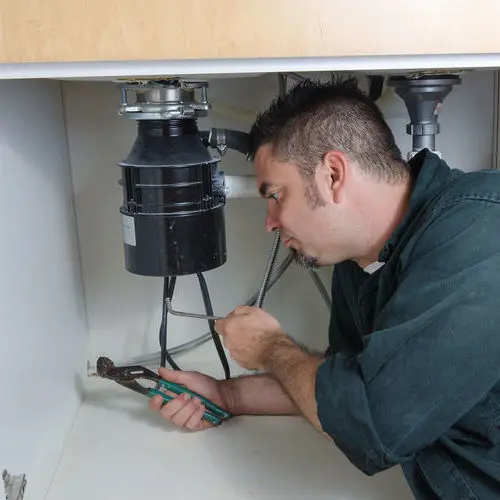
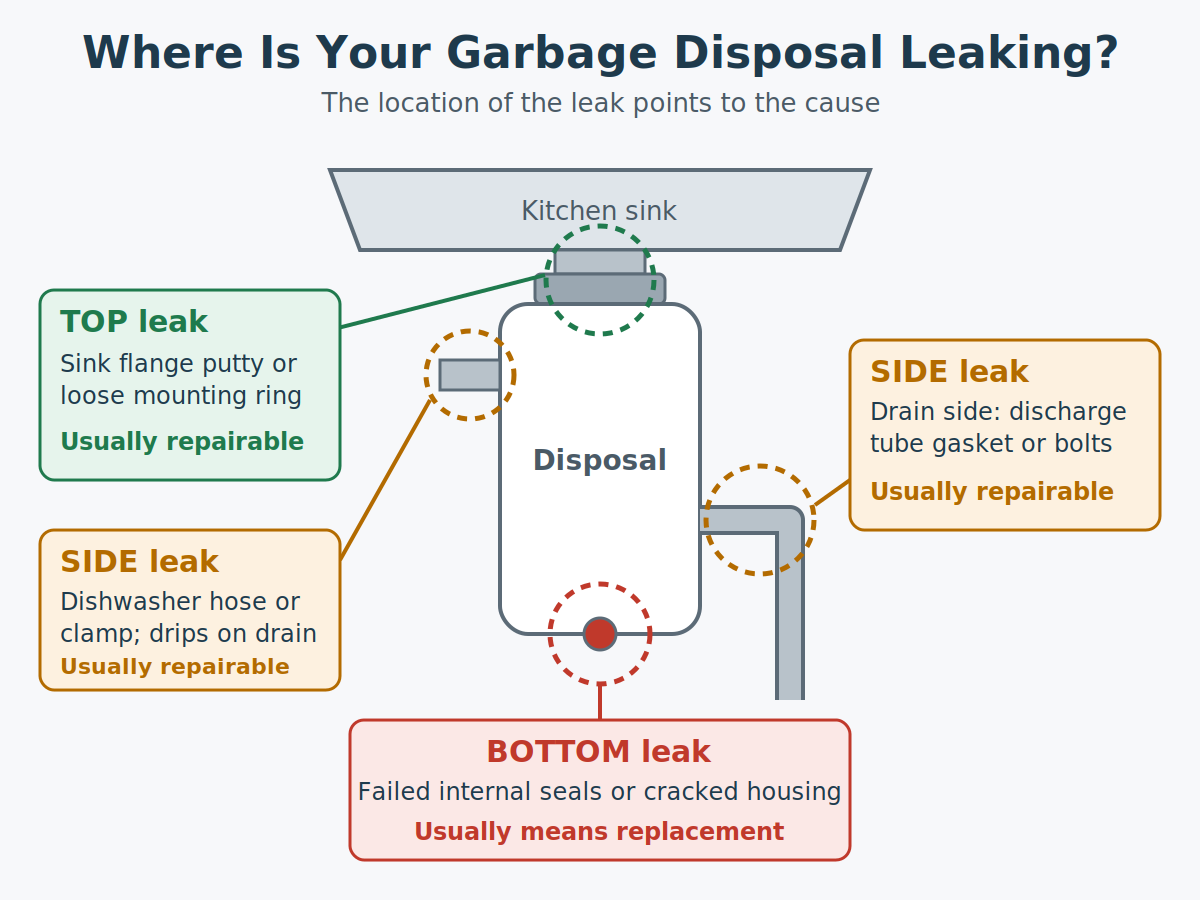
Why is my garbage disposal leaking? Where the water shows up tells you. A leak at the top usually means the plumber’s putty at the sink flange has failed or the mounting assembly has loosened. A leak on the side points to the dishwasher hose or the discharge tube. A leak from the bottom usually means the internal seals have worn out, and the unit needs to be replaced.
Most top and side leaks are fixable with basic tools. Before you start, turn off the disposal at the wall switch and at the circuit breaker, or unplug it if it’s plugged into an outlet under the sink.
How to Find Where Your Garbage Disposal Is Leaking
Water travels. A drip from the top of the disposal can run down the side and fall off the bottom, which makes a simple fix look like a dead unit. Take five minutes to find the true source first.
- Dry everything. Wipe down the disposal, the pipes, the dishwasher hose, and the cabinet floor with paper towels until nothing is damp.
- Grab a flashlight. You’ll want to see the top, both sides, and the bottom of the unit clearly.
- Run cold water into the sink for 30 to 60 seconds and watch for the first sign of moisture.
- Turn the disposal on with the water running. Some leaks only appear when the unit is vibrating.
- Run the dishwasher’s drain cycle if nothing has shown up yet. Leaks at the dishwasher connection only appear when the dishwasher pumps water through it.
- Note where water appears first. That spot is your answer.
Also check above the disposal. A leak at the base of the faucet or at the sink’s supply lines can drip down onto the disposal and look like a disposal leak. If that’s the source, you need a faucet repair, not a new disposal.
Why Is My Garbage Disposal Leaking? Match the Leak to the Cause
| Where the leak appears | Likely cause | Usual fix |
|---|---|---|
| Top, where the disposal meets the sink | Dried or cracked plumber’s putty at the sink flange | Remove the flange, clean it, and reseal with fresh putty (DIY-friendly) |
| Top, with a disposal that wobbles | Loose mounting assembly | Tighten the mounting ring and screws (DIY-friendly) |
| Side, only when the dishwasher drains | Loose clamp or worn dishwasher drain hose | Tighten or replace the clamp or hose (DIY-friendly) |
| Side, at the pipe running to the drain | Worn gasket or loose bolts on the discharge tube | Replace the gasket and tighten the connection (DIY-friendly) |
| Bottom, often near the reset button | Failed internal seals or a cracked housing | Replace the disposal |
1. Worn Plumber’s Putty at the Sink Flange
The sink flange is the metal collar that sits in the sink’s drain opening. A ring of plumber’s putty seals it to the sink. Over years, that putty dries out, shrinks, and cracks, and water starts seeping between the flange and the sink before dripping onto the top of the disposal.
To reseal it:
- Turn off power to the disposal at the breaker.
- Disconnect the dishwasher hose and discharge tube, then remove the disposal from the mounting ring. Support the unit from below, since disposals are heavier than they look.
- Loosen the mounting assembly and push the flange up and out of the sink.
- Scrape all the old putty off the flange and the sink opening, then clean both surfaces.
- Roll a fresh, even rope of plumber’s putty, press it around the underside of the flange lip, and set the flange back in the drain.
- Reinstall the mounting assembly, tighten it evenly, wipe away the excess putty, and remount the disposal.
- Reconnect the hoses, restore power, and run water to check for leaks.
2. A Loose Mounting Assembly
The disposal hangs from a mounting assembly that clamps to the flange. Years of vibration can loosen it enough to break the seal even when the putty is fine. If the disposal wobbles when you push on it, tighten the mounting assembly first. It takes a few minutes and sometimes solves the leak on its own. If the drip returns, reseal the flange.
3. The Dishwasher Hose Connection
If your dishwasher drains through the disposal, its drain hose connects to a small inlet on the side of the unit with a hose clamp. That clamp can loosen or corrode, and the hose can crack with age. Because the leak only appears when the dishwasher drains, it’s easy to miss.
Tighten the clamp with a screwdriver. If the clamp is rusted or the end of the hose is cracked, replace them. Hose clamps are inexpensive and widely available.
4. The Discharge Tube Gasket
The discharge tube is the bent pipe that carries ground-up waste from the disposal to the drain line. It connects to the disposal with a rubber gasket and a flange held by bolts. The gasket hardens over time, and vibration loosens the bolts.
Tighten the bolts first. If the leak continues, remove the tube, replace the gasket with one that fits your model, and reinstall it. Also check the slip nut where the tube meets the P-trap. If the leak is farther down the drain line, or the drain backs up when you run the disposal, the problem may be in the pipe itself, and professional drain cleaning may be the fix.
5. Failed Internal Seals or a Cracked Housing
A leak from the very bottom of the disposal, often around the reset button, is different from the others. It doesn’t come from a connection. It comes from inside the unit, where seals keep water in the grinding chamber away from the motor. When those seals wear out, or the housing cracks, water escapes out the bottom.
This is the one leak that almost always means replacement. The internal seals generally aren’t sold as consumer repair parts, and the labor to take the motor apart would typically cost more than a new disposal. Stop using the unit, keep the power off, and plan a replacement. Water leaking near a motor and wiring is not something to keep running.
How to Prevent Garbage Disposal Leaks
A few habits help your disposal and its seals last longer:
- Use cold water when it’s running. Manufacturer guidance recommends a cool or cold steady stream of water while the disposal runs, so any fat stays solid and moves through the drain.
- Keep grease and oil out of the drain. They coat the unit and the pipes and contribute to clogs.
- Don’t overload it. Feed food in gradually with the water running instead of packing the chamber first.
- Don’t overtighten fittings. Plastic fittings and the housing can crack under too much force.
- Look under the sink every month or so. Catching a slow drip early protects the cabinet.
If you do find water, dry the cabinet out quickly. The U.S. Environmental Protection Agency’s guidance is to respond to clean water damage within 24 to 48 hours to help prevent mold growth, which matters in a closed sink cabinet.
When to Call a Plumber
Call a licensed plumber when:
- The leak is coming from the bottom of the unit
- Water is near the disposal’s wiring or the outlet under the sink
- You’ve tightened and resealed the connections, and it still leaks
- The disposal body is visibly cracked
- The cabinet floor is soft, swollen, or stained from a long-term leak
Kinnett Plumbing’s garbage disposal repair service starts with finding the real source. If a new gasket or fresh putty will fix it, that’s what we’ll recommend. We’ll only suggest a replacement when the unit actually needs one.
Frequently Asked Questions
Can a garbage disposal leaking from the bottom be fixed?
Usually not. A leak from the bottom almost always means the internal seals have failed or the housing has cracked. Those seals generally aren’t sold as repair parts, and taking the motor apart typically costs more than a new unit. Before you give up on it, dry the unit and retest to confirm the water isn’t dripping down from the top or side.
Why does my garbage disposal only leak when the dishwasher runs?
That pattern points to the dishwasher drain connection on the side of the disposal. The clamp holding the dishwasher hose may be loose or corroded, or the hose may be cracked near its end. Tighten the clamp first, then replace the clamp or hose if the leak continues. Watch the connection during a drain cycle to confirm it.
Is it safe to use a leaking garbage disposal?
It’s best to stop using it until you find the source. A leak at the sink flange or a side connection isn’t dangerous on its own, but it will keep damaging the cabinet. A bottom leak means water is getting near the motor and wiring, so keep the power off and plan a replacement.
Should I use hot or cold water with a garbage disposal?
Use cold water. Disposal manufacturers recommend a steady stream of cool or cold water while the unit runs, because it keeps fats solid so they move through the drain instead of coating the unit and pipes. Keep the water running for a few seconds after grinding stops to flush the drain line.
Get Your Kitchen Sink Back to Normal
Most garbage disposal leaks are small fixes. When they aren’t, you want a plumber who will tell you straight. Kinnett Plumbing is a licensed, family-owned plumbing company based in Manassas, with a 4.9-star rating across 811 reviews from Northern Virginia homeowners.
Call (703) 878-3154 or book a repair online.







 Jennifer Bishop